



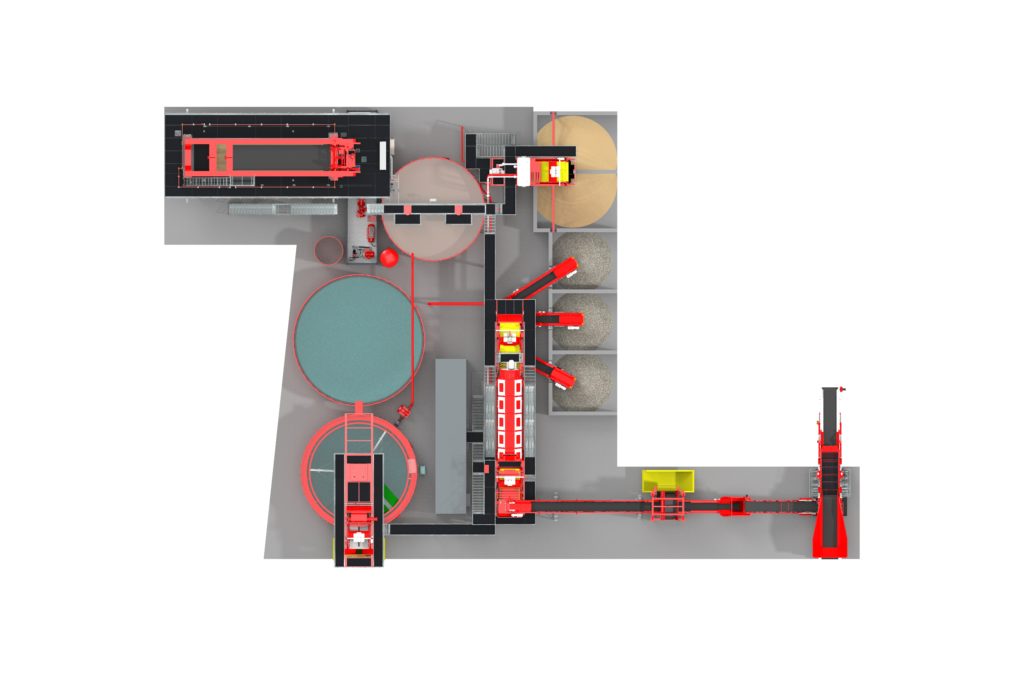
Headlands Brings Large-Scale Soil Washing to BC’s Lower Mainland
The facility will be the first modular, scalable, dual-feed wash plant in Canada.
Every construction project begins with the ground beneath it. When that soil is contaminated, development can quickly become delayed, expensive, and complicated. Headlands Environmental provides professional soil remediation services across British Columbia that help municipalities, developers, contractors, consultants, and industrial clients safely manage contaminated soil while reducing waste and maximizing material recovery.
Located in Chilliwack, British Columbia, Headlands Environmental serves projects throughout the Lower Mainland, Fraser Valley, the Interior, and across Western Canada. Our approach combines innovative treatment technologies with practical environmental solutions that reduce landfill disposal and support sustainable development.
Whether you’re dealing with petroleum hydrocarbons, heavy metals, invasive species such as Japanese knotweed, or other contaminated materials, our team works closely with your project to determine the most effective treatment strategy.
Soil remediation is the process of removing contaminants from soil so it can be safely reused, redeveloped, or returned to the environment.
Contamination can occur for many reasons including:
Without remediation, contaminated soil often requires expensive disposal at specialized landfills. Modern remediation technologies offer an alternative by treating the soil instead of simply throwing it away.
At Headlands Environmental, we focus on recovering as much usable material as possible while meeting environmental regulations and project timelines.
Every site is unique, which is why our process begins with understanding your project.
We review environmental reports, laboratory results, and project objectives to determine the appropriate treatment approach.
Our team evaluates contamination levels, soil composition, and treatment options.
Depending on the contaminants present, treatment may include:
Rather than relying on one technology, we tailor a solution that delivers the best environmental and financial outcome.
Whenever possible, clean aggregates and treated soils are recovered for beneficial reuse, reducing the amount of waste sent to landfill.
We provide clear reporting and documentation to support regulatory compliance and project requirements.
Professional soil remediation provides benefits that extend well beyond regulatory compliance.
Treating contaminated soil can significantly reduce the amount of material requiring landfill disposal.
Recovering reusable aggregates and soil helps conserve natural resources while reducing environmental impacts.
Proper remediation helps projects comply with British Columbia’s environmental standards and contaminated site regulations.
Efficient soil management minimizes delays and helps construction schedules stay on track.
Removing contamination helps lower long-term environmental risks associated with future property ownership and redevelopment.
Environmental projects require practical solutions backed by experience and innovation.
Our team is committed to finding smarter ways to manage contaminated soil while minimizing environmental impact.
Clients choose Headlands Environmental because we offer:
As our treatment capabilities continue to expand—including Canada’s first modular dual-feed soil washing facility and advanced soil steaming technology—we remain focused on delivering environmentally responsible solutions that help clients achieve better project outcomes.
Treatment options depend on the contaminants present and may include petroleum hydrocarbons, metals, invasive plant material, and other regulated contaminants.
In many cases, yes. Treating soil can reduce disposal costs, recover reusable materials, and significantly lower environmental impacts compared to landfill disposal.
Our operations are based in Chilliwack, British Columbia, and we support projects across the province and throughout Western Canada.
Our team reviews your environmental reports and project requirements before recommending the most effective treatment strategy.
The facility will be the first modular, scalable, dual-feed wash plant in Canada.

P.Eng, Ph.D, Chairman, President, Chief Engineer | Sperling Hansen Associates

President | Frontline Machinery Ltd
Project Manager | Milestone Environmental Contracting

Economic Development Officer | Shxwhá:y Village

P. Eng. | KBL Environmental
President and Director | K92 Mining Inc.
Founder and CGO Soil Steam International

Managing Director, Frontline Washing Systems

 Our Clients